Valentine’s Day After Emotional Distance: How to Write a Love Letter That Rebuilds Connection
Sometimes Valentine’s Day arrives when love is still there, but closeness is not. If the recent months have felt confusing, tender, or emotionally far away, a thoughtful message can become the first safe bridge back to each other.
Not every Valentine’s Day arrives in a season of easy romance. Sometimes it lands after weeks of short replies, postponed conversations, or that painful feeling that the person you love is physically present but emotionally harder to reach. You still care. Maybe they still care too. But something has gone quiet between you, and now the occasion puts pressure on a question you have been avoiding: what do you say when love is still alive, but connection feels fragile?
Personalized digital gift
Turn the inspiration from the post into an unforgettable surprise
Build a page with photos, message, music, and a ready-to-share link for someone you love.
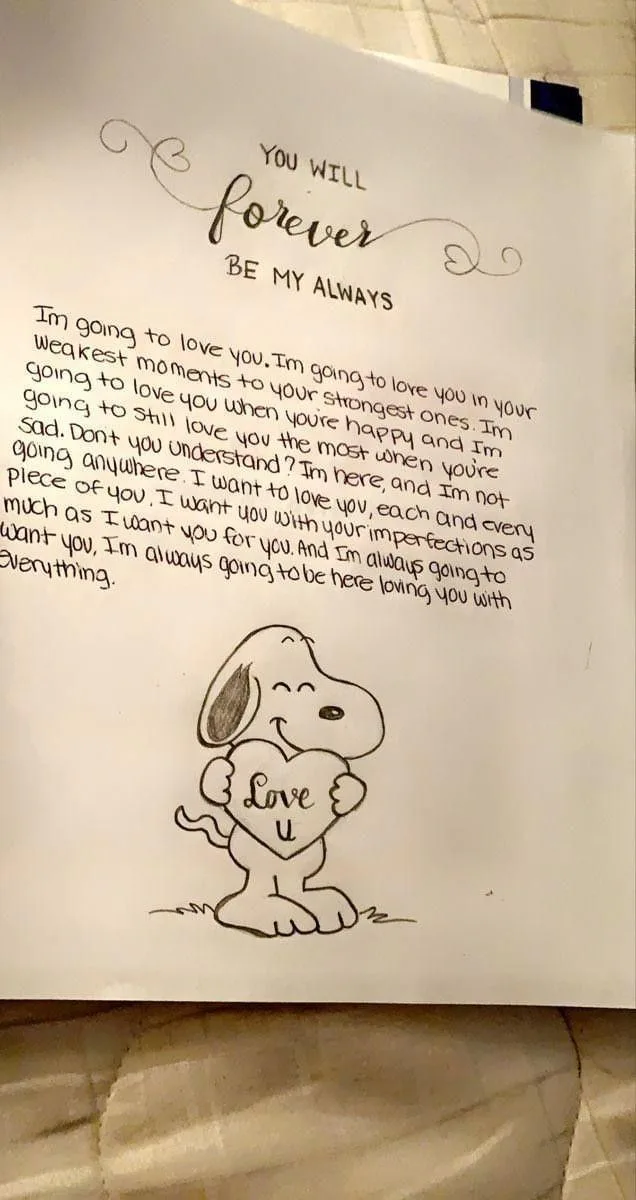
The images tell that story with surprising clarity. One shows the furrowed-brow loneliness of someone staring at a screen, trying to make sense of distance. Another brings in family, movement, and possibility: two children running forward, laughter in the air, adults behind them, suggesting that love often unfolds in real life, not fantasy. The final image returns to what many couples forget when things become tense: a handwritten love note can hold softness that spoken words sometimes cannot.
That is why this moment maps most powerfully to Valentine’s Day. Not because the relationship is perfect, but because Valentine’s Day is often less about grand passion than about emotional courage. It is a chance to say, gently and clearly, “I still want to meet you here.” For 2luv users, that can mean sending a digital love letter that feels intimate, thoughtful, and safe enough to reopen a conversation.
What These Images Reveal About Modern Love
The first image reflects a distinctly modern heartbreak: silence mediated by technology. We search old messages, reread tone, measure delays, and try to decode what absence means. Emotional distance today rarely looks dramatic at first. It looks like ambiguity. And ambiguity can be more distressing than a clean ending because it leaves hope and fear alive at the same time.
The second image broadens the emotional landscape. Love is not lived in a vacuum; it exists alongside children, blended families, logistics, responsibilities, ex-partners, fatigue, and future questions. If your partner is carrying a heavy life, emotional withdrawal may not always mean lack of love. Sometimes it means overwhelm, divided attention, or uncertainty about how to integrate intimacy with responsibility.
The third image offers the answer the article is moving toward: written affection slows everything down. A love letter creates a container for tenderness without interruption. It lets the other person receive your feelings without needing to defend themselves in real time. On Valentine’s Day, that matters. The goal is not to force a resolution. The goal is to offer warmth, clarity, and emotional safety.
What Relationship Research Says About Emotional Distance
Relationship science consistently shows that closeness is built less by dramatic declarations than by small moments of responsiveness. Psychologist John Gottman describes healthy relationships as shaped by everyday “bids” for connection: a question, a glance, a joke, a vulnerable admission, a message saying “I’m thinking of you.” When these bids are repeatedly missed, couples often begin to feel emotionally alone even if they have not technically broken up.
Two joyful children running ahead while adults follow behind evokes the hope, complexity, and real-life warmth of love that includes family, responsibility, and shared futures.
One of the fundamental ways that people build trust is with very small moments.
John Gottman, in "The Gottman Institute"
That insight is especially useful for Valentine’s Day. If things have felt distant, your message does not need to solve the whole relationship in one night. It only needs to become one honest, attuned moment that says: I see the space between us, and I want to approach it with care.
Brené Brown’s work on vulnerability adds another layer. She argues that we cannot experience deep love without emotional risk. But vulnerability is not oversharing, pleading, or collapsing boundaries. It is telling the truth about what matters in a way that remains grounded and respectful. A strong Valentine’s message after emotional distance names your feelings without turning them into accusation.
Vulnerability is the birthplace of love, belonging, joy, courage, empathy, and creativity.
Brené Brown, in "Daring Greatly"
Classic literature has long understood this too. Erich Fromm, in The Art of Loving, wrote that love is not merely a feeling but a practice of care, responsibility, respect, and knowledge. That idea matters when romance feels shaky. Real love is not proven only by intensity. It is proven by how we care for another person’s inner world, especially when things are strained.
Love is the active concern for the life and the growth of that which we love.
Erich Fromm, in "The Art of Loving"
How to Write a Valentine’s Day Message When Things Feel Distant
If you want your Valentine’s Day note to heal rather than intensify tension, think in five steps: observe, affirm, own, hope, and release. First, observe what has been happening without exaggeration. Second, affirm the value of the relationship or the person. Third, own your feelings and your part where appropriate. Fourth, express a hope that is warm but not controlling. Fifth, release the message without demanding immediate reassurance.
Use gentle specifics: mention a recent feeling or memory rather than vague dramatic language.
Avoid blame-heavy openings such as “You never” or “You stopped caring.”
Name what you appreciate about them, especially if life has been complicated.
If children or family pressures are part of your reality, acknowledge them with maturity.
Keep the message emotionally open, not emotionally coercive.
End with an invitation, not an ultimatum.
A handwritten note with romantic details reminds us that love often returns to simple truths: reassurance, tenderness, and words that make someone feel chosen again.
This is where a 2luv digital gift becomes especially powerful. You can combine a written message with meaningful photos, shared memories, or a carefully chosen visual style that communicates tenderness before a single sentence is read. For someone who feels overwhelmed, that format can be easier to receive than a long confrontation. It feels considered, intimate, and emotionally paced.
What to Include in Your 2luv Valentine’s Digital Love Letter
A soft opening that lowers defensiveness: “I wanted to write instead of rushing this.”
One true memory that reminds them who you are together.
A sentence of appreciation for how they love, try, parent, support, or endure.
A clear but calm truth: “I’ve felt the distance, and I miss you.”
A hopeful next step: “If you’re open to it, I’d love to talk after you read this.”
Copy-and-Paste Valentine’s Day Message Templates
What to write in your 2luv digital gift when you want to reconnect with love and dignity.
Happy Valentine’s Day. I know things have felt different between us lately, and I didn’t want to pretend I haven’t felt it. But I also didn’t want this day to pass without telling you that you still matter deeply to me. I miss the ease between us, and I still believe what we have is worth tenderness, honesty, and care.
I’ve been thinking about us a lot, not in a dramatic way, but in a sincere one. I miss your warmth, your voice, and the version of us that felt open and safe. On Valentine’s Day, I just want to say this clearly: I love you, I respect what you may be carrying, and I’m here if you want to find our way back toward each other.
Happy Valentine’s Day, love. I know life has been heavy, and I know not every kind of distance means the same thing. I only wanted to offer something gentle today: gratitude for you, affection for you, and honesty about the fact that I miss feeling close to you. If your heart has room, I’d love for this to be the beginning of a softer conversation.
Today isn’t about pressure for me. It’s about truth. The truth is that I still care about you very much, and I still hold so many beautiful things about us close to my heart. If there has been hurt, confusion, or exhaustion between us, I hope this message can be a small reminder that love can return through kindness, patience, and one honest step at a time.
Happy Valentine’s Day. One of my favorite things about loving you is the life inside our ordinary moments. Even when things feel uncertain, I remember the goodness in you and the goodness we’ve shared. I’m sending this not to demand anything, but to let you know that my heart is still open, and I would welcome a chance to reconnect.
A Final Thought for Valentine’s Day
Not every love story needs a dramatic rescue. Sometimes it needs a well-timed message that replaces guessing with truth and defensiveness with warmth. The worried face at the laptop, the reality of family life, and the tenderness of a handwritten note all point to the same lesson: when connection feels uncertain, words can still become a bridge.
This Valentine’s Day, let your 2luv message do more than sound romantic. Let it be emotionally intelligent. Let it acknowledge reality. Let it carry appreciation, vulnerability, and hope. You do not need to write the perfect love letter. You only need to write one that feels true enough to be received—and kind enough to be remembered.
Gallery
A tense moment alone with a screen captures the confusion many people feel when communication shifts, replies slow down, or emotional distance begins to grow in a relationship.Two joyful children running ahead while adults follow behind evokes the hope, complexity, and real-life warmth of love that includes family, responsibility, and shared futures.A handwritten note with romantic details reminds us that love often returns to simple truths: reassurance, tenderness, and words that make someone feel chosen again.
Explore more on 2luv
Keep browsing related 2luv pages for events, categories, and tags connected to this story.