Valentine’s Day Message Ideas After a Fight: How to Write a Loving, Healing Card
Sometimes Valentine’s Day arrives while a relationship is still tender from an argument. These image-inspired message ideas show how to turn apology, reassurance, faith, and affection into a heartfelt 2luv Valentine’s Day card that helps you reconnect with honesty.
Valentine’s Day Can Arrive Right in the Middle of Real Life
Not every Valentine’s Day begins with roses, dinner plans, and easy smiles. Sometimes it arrives after a hard week, a misunderstanding that went too far, or a fight that left both of you quieter than usual. You still love each other, but the air feels fragile. You want to reach out without sounding defensive, dramatic, or fake. That is exactly where a thoughtful message matters most.
Personalized digital gift
Turn the inspiration from the post into an unforgettable surprise
Build a page with photos, message, music, and a ready-to-share link for someone you love.
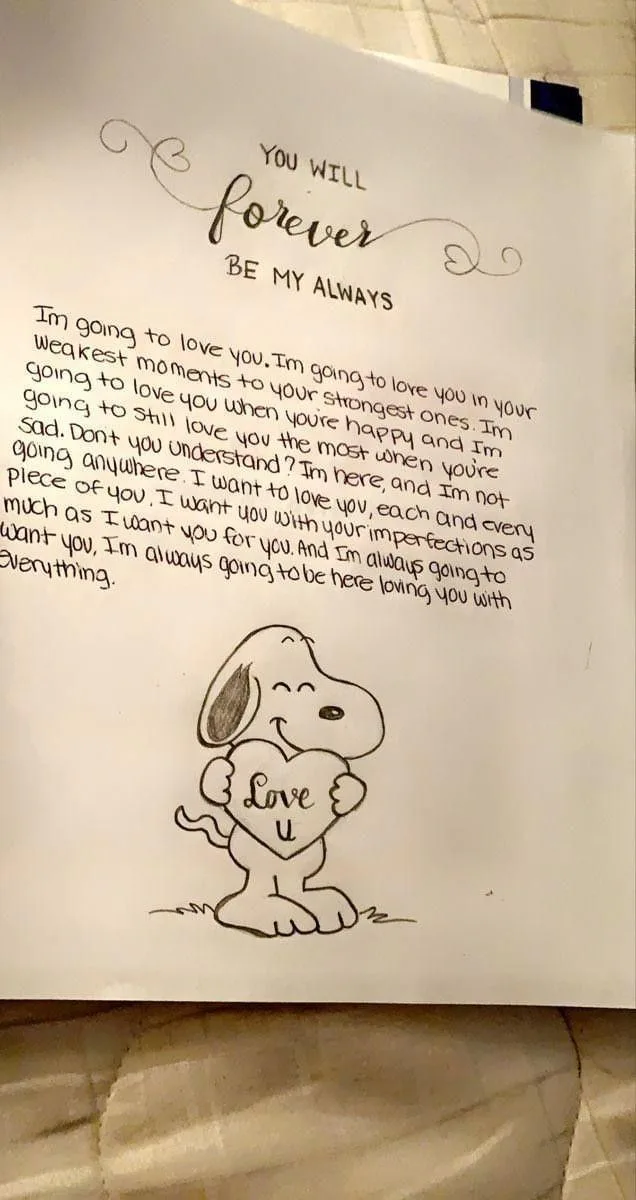
The images here tell that story beautifully: a handwritten promise of enduring love, a warm digital message delivered face-to-face through video, and a couple reading together in a moment of calm reflection. Together, they suggest a powerful Valentine’s Day truth: romance is not only about celebration. It is also about repair, reassurance, and choosing each other again with tenderness.
What These Images Say About Love After Conflict
The handwritten letter feels imperfect in the best way. It is not polished or performative. It says, in essence, I choose you in your weak moments and your strong ones. That matters because after conflict, people are usually not asking for poetic perfection. They are asking one quieter question: Are we still safe with each other?
The digital postcard image adds another layer. A typed message can soothe, but a recorded voice or short video can carry emotional cues that text often misses: remorse, warmth, softness, pause. In relationship repair, tone matters. Eye contact matters. A small digital gesture can feel surprisingly intimate because it reduces ambiguity.
The final image, a couple reading Scripture together, evokes shared meaning. Whether a couple is religious or simply reflective, healing often deepens when partners reconnect to values larger than the argument itself: kindness, patience, humility, forgiveness, loyalty, and hope. Valentine’s Day becomes richer when the message is not just I miss us, but also this is the kind of love I want us to practice.
What Relationship Research Says About Repair
Psychologist Dr. John Gottman, one of the most influential researchers on marriage and long-term relationships, has spent decades studying what helps couples stay connected. One of his most important findings is that conflict itself is not the main predictor of relationship failure. What matters more is whether couples know how to repair after conflict. Repair can be a sincere apology, a soft joke, a hand on the shoulder, or words that reduce threat and invite closeness again.
Happy couples are not couples that don’t fight. They are couples that know how to repair after fights.
John Gottman, in "Relationship research and teachings on repair attempts"
That idea fits these images perfectly. A Valentine’s card after an argument should not pretend nothing happened. It should become a repair attempt. In practice, that means naming the hurt without relitigating the whole conflict, offering reassurance without manipulation, and expressing love without erasing accountability.
A digital postcard with video reminds us that sometimes healing lands more deeply when someone can see your face, hear your voice, and feel your sincerity.
Brené Brown’s work on vulnerability also matters here. Many people think the strongest message is the most elegant or the most romantic. Often, the strongest message is simply the most honest. Saying I know I hurt you, I hate that I made you feel alone, and I want to do better requires emotional courage. Vulnerability is not weakness in love; it is often the doorway back to trust.
Vulnerability is the birthplace of love, belonging, joy, courage, empathy, and creativity.
Brené Brown, in "Daring Greatly"
If your relationship is guided by faith, the third image also points toward a timeless framework. In 1 Corinthians 13, love is described not as intensity alone but as patient, kind, and enduring. Even outside a religious setting, these words remain psychologically wise. Lasting love is not measured only by passion on the easiest days, but by the discipline of tenderness on the hardest ones.
Love is patient, love is kind.
The Apostle Paul, in "1 Corinthians 13:4"
We also find wisdom in bell hooks, who wrote about love as an action rather than a vague feeling. That distinction is crucial after a fight. If you want Valentine’s Day to help heal the distance between you, your message should show love as practice: listening, responsibility, care, trust, and commitment.
Love is as love does. Love is an act of will—namely, both an intention and an action.
bell hooks, in "All About Love"
How to Write a Valentine’s Day Message After a Fight
A healing message usually has five emotional moves. First, begin gently. Start with warmth, not argument. Second, acknowledge the rupture clearly. Third, take responsibility for your part without adding excuses. Fourth, reassure your partner of your love and your intention. Fifth, end with hope, invitation, or blessing.
Open with affection: 'My love,' 'Sweetheart,' or a phrase that sounds like you.
Name the moment honestly: 'I know things have felt heavy since our argument.'
Own your impact: 'I’m sorry for the way my words hurt you.'
Reassure the bond: 'My love for you did not disappear in our worst moment.'
Offer a forward step: 'I want to listen better, speak softer, and rebuild this with you.'
If you are sending your message through 2luv, consider pairing the written note with a short video message. The second image suggests exactly why this works: your face, voice, and pauses communicate sincerity. A handwritten-style message can soften the heart; a video can restore emotional clarity. If faith is part of your relationship, you can also include a verse, prayer, or reflection that aligns with your shared values.
A couple reading Scripture together evokes a quieter form of intimacy: rebuilding love through shared values, reflection, and gentle presence.
What Not to Write
Avoid: 'I’m sorry you felt that way.' It sounds distancing.
Avoid turning the card into a courtroom summary of who was right.
Avoid grand promises you cannot keep by next week.
Avoid guilt-based lines like 'If you loved me, you’d forgive me today.'
Avoid copying language that sounds romantic but does not sound like your real voice.
Copy-and-Paste Valentine’s Day Message Templates
Use these as-is in a 2luv Valentine’s Day card, or personalize them with a memory, nickname, voice note, or photo.
My love, I know this Valentine’s Day finds us in a tender place, and I don’t want to pretend otherwise. I’m sorry for the hurt I caused in our argument. Even in the middle of hard moments, I am still choosing you. I love you deeply, and I want to keep learning how to love you more gently, more honestly, and more well.
Happy Valentine’s Day, love. I wish the last few days had been softer on your heart. I’m sorry for the words and tone I used. You matter to me far more than my pride does. I hope this message reminds you that my love for you is still here, and so is my desire to repair what feels bruised between us.
You are not only the person I celebrate on easy days. You are the person I want to stand beside through misunderstanding, growth, and healing too. I’m sorry for my part in our fight. Today, on Valentine’s Day, I want to say clearly: I love you, I value us, and I want to rebuild closeness with patience and care.
I have been thinking about us, about what happened, and about how much I never want my frustration to make you feel unloved. I am sorry. You deserve tenderness, honesty, and respect from me. Happy Valentine’s Day to the person who still has my whole heart, even when we are finding our way back to each other.
My Valentine, I know a holiday message cannot fix everything by itself, but I hope it can be a small bridge back to each other. I am sorry for hurting you. I love you in the bright moments and in the messy ones. If you are willing, I would love to start again with a softer conversation, a listening heart, and an open hand.
Small Add-Ons That Make the Message More Healing
Add one specific memory: a trip, a joke, a quiet night, or a moment they felt safe with you.
Include one concrete commitment: 'I will pause before reacting,' or 'I want to hear your side without interrupting.'
Attach a short video message if you need your sincerity to be felt, not just read.
If relevant, include a verse, prayer, or shared value that reflects the relationship you want to build.
End with an invitation, not pressure: 'When you’re ready, I’d love to talk.'
A Beautiful Valentine’s Day Message Does Not Need to Be Perfect
The most moving part of these images is not perfection. It is intention. A handwritten promise. A warm digital face on a screen. A quiet shared reading. All three say the same thing in different forms: love returns on purpose. If your relationship has been strained, Valentine’s Day can still be meaningful. In fact, it may matter even more because your words become a way of rebuilding safety, not just celebrating romance.
With 2luv, you can turn that intention into something tangible: a heartfelt digital Valentine’s card, a voice note, a video message, a photo memory, or a written love letter that says what pride often struggles to say out loud. Start simple. Be honest. Be kind. Let your message do what the best love always does: move one step closer.
Gallery
Explore more on 2luv
Keep browsing related 2luv pages for events, categories, and tags connected to this story.